Prentiss White had worked for a variety of international development agencies for years - The World Bank, the United Nations, USAID, and the African and Asian Development Banks. 'A good ride', he was fond of saying. 'Marvelous times.'
He had been treated well, emissary as he was from a rich country to the world's poorest, bringing millions of dollars in grants and soft loans, mostly free cash with no strings attached. Accountability was the least concern of foreign donors anxious to curry favor with politically strategic, resource-rich nations.
This largesse began during the Cold War when the United States and the Soviet Union vied for influence. Washington's money kept flowing as long as countries hewed to the American line, no questions asked, no justification needed as the number of Soviet pins on the State Department's war board kept multiplying.
When the Cold War had thawed, the United States kept the aid spigots open. There was mineral and energy wealth to be had, and if America didn't get its hands on it first, China and renascent Russia would. And so it was that a network of client states was established, all ruled by African 'Big Men', dictators for life, autocratic rulers with secret police, mansions, and little concern for those they ruled.

Throughout the Sub-Sahara to South Africa, east and west, corrupt leaders were kept in power. The money flowed from Washington through their hands directly into offshore bank accounts. The business of 'development' was simply a charade, a convenient cover for this financial jamboree, while the credulous American taxpayer needed only to know that his government was using his money to make the world a kinder, more compassionate, and better place.
And so it was that Prentiss White travelled to Africa to 'do good'. His first class flights and five star hotels were not perks but necessities, aid agencies reasoned, since working in the most pestilential, forgotten corners of the world demanded respite. A chilled, air-conditioned hotel with plentiful buffets and first class room service were the consultant's refuge after day's work in the slums or in baking remote villages.
The stories of how the Big Men suckered the foreign donor were legion. There was President Deby of Chad who snookered the World Bank into giving him millions in exchange for international oversight of his uranium which he promised to sell at premium prices to the Soviet Union. Deby promised, the World Bank paid up, and Deby welcomed the Soviet Ambassador to sign a mutually beneficial bilateral uranium pact.
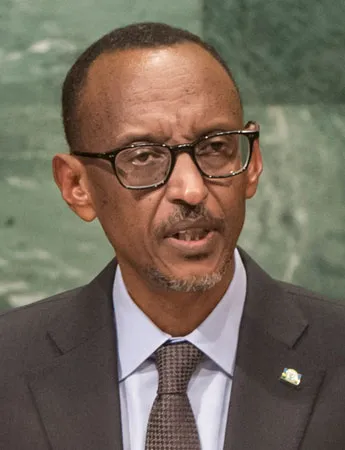
Or Kagame of Rwanda who took the United States for hundreds of millions, shaming President Clinton for his desultory, dilatory approach to the genocide. Kagame, the hero of the West, took the money and became one of the longest-ruling dictators ln the continent, fueling resource wars in the Congo and ruling his country with a Soviet-style iron hand.
Or Mobuto of Zaire, the leopard of the forest, the savior of Africa whose billions in copper, rare earth metals, and more made him the most sought after ruler on the continent. Thanks to the United States and Europe, Mobutu became a fabulously wealthy man. His neighbor Bokassa of the Central African Republic, a good friend of former French President Giscard d'Estaing, became another African Croesus, awash in European wealth and patronage. Or Mugabe of Zimbabwe, murderer of whites, corrupt, incorrigible imposter. The list goes on.
Prentiss had worked in international development for long enough to understand how the game was played - how health, welfare, and social programs would never get implemented and how hundreds of millions of dollars were spent on American consultants who simply turned a wheel which revolved in circles with no traction whatsoever.
A marvelous shadow play where US political interests were served, American consulting firms made millions, consultants enjoyed the good life, the bank accounts of Big Men were filled to overflowing, and the American public was happy that their country was helping to solve the problem of world poverty.
This charade not only siphoned billions into the pockets of the most undeserving, it set back real development by decades. Stopping foreign aid would have been a godsend to the people of Africa, forcing dictators to look to capital market to borrow for only the loans they needed to build the country; but no. The sluice gates remained open and the continent has budged an economic inch since independence sixty years ago.
As Prentiss checked in to his five-star hotel in the capital of 'his' country, the one to which he went on various missions to supervise the generous grant given by USAID, the beautiful Fulani desk clerk smiled broadly. 'Welcome back, Mr. White. I hope you had a good trip' and with that he was escorted to his penthouse suite overlooking the river and the jungle beyond.

In the week to follow he paid desultory visits to a school lunch program, rural dispensaries, training sessions, and health education sessions. He was always greeted with a warm welcome, hundreds of school children garlanded him with hibiscus and jacaranda, music played and feasts were served. As for the rest, the purpose of his mission? A few random books on the shelf, 'shortages' of donated food, empty dispensary cabinets, all explained by 'logistical problems', staff illness, and heavy rain.
Prentiss carried on as if nothing were wrong - this is the way development aid worked. Money was given, money never arrived, nothing happened, and more was allocated. A shell game, an elaborate Ponzi scheme. Brilliant!
Back at the hotel, Prentiss dressed for dinner with his elegant Moorish companion, a woman with the pedigree of a pasha, the beauty of a Moroccan princess, and the grace and charm of Fifth Avenue. She was costly, but worth every penny. The delights of foreign assistance were many.
He smiled at the young aid workers assembled for a journey upcountry. This was the other axis of foreign assistance - the legions of young, enthusiastic Americans who felt good about doing good, about actually being with black people, interacting with them, helping them. They eagerly ate with their hands out of a common bowl, suffered bouts of dysentery and malaria stoically, endured intolerable heat, mosquitoes and interminable rides into the bush, and asked no questions about why or wherefore. Doing good, regardless of the reason or outcome was simply good.
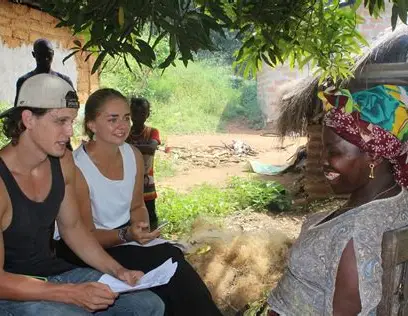
Everyone benefits from international development, explained Prentiss to family and friends back home - leaders of needy countries, the United States and its allies, private consultants like himself, international banks, young Peace Corps volunteers, a nexus of enterprise.
He let his audience thank him for his services to the poor, and he demurred. They, the credulous American public was the unseen, complicit fourth actor in the charade. Without them and their unquestioning support, there would be no program. Their marvelous idealism kept him in business.
And so it was that when Donald Trump abolished USAID, Prentiss said, 'It's about time'. His well-paid, perk-filled, untroubled times might be over, but he was ready to retire; and looking back on the good times he would miss his Moorish consort, his candle-lit dinners overlooking the river, and the generosity and friendship of his African colleagues. That was 'development' after all, a good and wise job choice.


 Posts
Posts


No comments:
Post a Comment
Note: Only a member of this blog may post a comment.