"Whenever I go into a restaurant, I order both a chicken and an egg to see which comes first"

Tuesday, August 13, 2019

Men Who Are Irresistible To Women - A Post-Feminist Tale

Littlejohn Parker had been born to wealthy, sophisticated parents – the kind that wintered in St. Bart’s and Gstaad, summered on the Vineyard, and spent the rest of the time between homes in the Berkshires and Carmel. Yet the Parkers financial ease came only partially from private incomes; for Littlejohn worked as hard as his father, expanding the once fledgling Montana mining operation into one of the largest privately owned companies in the United States.  By the time environmentalism and foreign competition had depressed the value of the company stock, Emory had amassed a small fortune, only a small portion of which he had placed in trust for his son, preferring that he make his money through the fruits of his labor just as he had.  Much of the flintiness of his father’s New England upbringing had gone by the time Littlejohn became a man – schooling and camaraderie with like-minded, fortunate, wealthy offspring of the region’s captains of industry had encouraged a more Mediterranean sense of pleasure and enjoyment – and while he had lost none of his father’s persistence and ambition, he was more relaxed about money, its stewardship, and the way it was spent.

Image result for images houses beacon hill boston

Not only had Littlejohn inherited the family genes of intelligence and good looks along with his portion of its fortune, he had inherited the sense of supreme confidence which comes with wealth, influence, and universal respect.  While not always the case – Billy Thornton, the heir to a steel fortune and the child of an equally well-placed family, was a bumbler, shy, and  lackadaisical – more often than not privilege begets privilege and a sense if not noblesse oblige then noblesse a ses droits, the assumed right of the upper class to lead, attract, and influence.

So it was no accident that Littlejohn – by now ‘Johnny’ – was irresistible to women and had been ever since the eighth grade, a time well before sexual maturity, when girls were still in pinafores and boys were interested only in cars and football.  Girls, without their own sexual maturity to know why, were attracted to him.  They wanted to be with him.  They looked at him over their schoolbooks, followed him up the stairs, brushed against him in the coatroom.  He was aware of this attention, and always acknowledged it.  He was never shy, nervous, or impatient.  His directness was never demanding but understanding.  He knew that these girls – like all the women in his later life – wanted acknowledgement, interest, and affection. 

By the time he had reached high school – or rather an exclusive New England prep school, feeder to Harvard and Yale to which, well-before the age of inclusivity, boys of the best families matriculated – his premature sexual awareness had become mature, physical, and seductive.  Girls were just as attracted to him as they were in eighth grade, but now it was a physical and emotional.  They wanted him, not just to be with him.

Littlejohn was as aware of these new sexual dynamics as he was in middle school.  He intuitively understood women and the nature of his attractiveness to them.  More than good looks, physical ability, intelligence, and social grace, it was confidence – an absolute, irrevocable sexual promise.  No matter who the girl, and regardless of their looks, allure, or vivacity, he was theirs. 

Not surprisingly he was attracted to women of the same ilk – women who were irresistible to men and who understood the nature of their allure.  “What I am is sexy”, says the Scarlett Johansson character in the Woody Allen movie Match Point, not as beautiful as her sister or as elegantly poised as her mother, but irresistible to men.  Marilyn Monroe was not classically beautiful like Ava Gardner, Hedy Lamarr, or Vivien Leigh, but had an unmatchable sensuousness and sensuality.  She had allure, an immediate, unmistakable and undeniable sexual appeal.  She  embodied sexual desire.  Men wanted her not for her beauty but to make love to her.  Nabokov understood this well when the wrote Lolita. There are some young girls – ‘nymphets’ – who are sexual long before they are aware of their sexuality or sexually mature.  They are born sexual.

Image result for scarlett johansson sexy

he theme of sexual harmony is not new.  Every man and woman hopes for a mutually satisfying sexual relationship and at least some intellectual, physical, and emotional satisfaction if not all three; and if one can believe popular romantic fiction, not an insignificant number of women hope for the best of all possible worlds, a spiritual union, D.H. Lawrence’s epiphany.  Serious fiction and drama are no different.  The brutal bloodletting of Albee’s Who’s Afraid of Virginia Woolf is all about finding sexual equilibrium, stripping pretense down to the marrow and starting over.  The Taming of the Shrew is perhaps Shakespeare’s only real love story.  Kate and Petruchio need each other,
complement each other, and form a perfect equilibrium.  Kate’s long soliloquy about adoring and respecting her husband has often been misread as Shakespeare’s angry misogyny; but it is just the opposite.  Petruchio has liberated Kate from her patriarchal father and abusive sisters, and she has given him the  strong, determined, willful, sensual woman he has sought for years.

Especially in this gender-sensitive, feminized age, the Lawrentian vision is looked at with some criticism.  There is no such thing as sexual mutuality, say feminist critics.  Male misogyny is deeply-rooted, hardwired, and inescapable.  The Idea of mutuality and equilibrium can only be a fiction in a patriarchal age.  Lawrence, they go on to say, is only feeding his own immature male sexual fantasies.

Lawrence’s conviction that such sexual epiphany can only come from a heterosexual union is also against the progressive polemic.  There is no such thing as sexual bi-polarity, only sexuality on a gradually defined gender spectrum. Matching any two of the hundred possibilities of sexual identity has nothing whatsoever to do with Lawrence’s insistence on heterosexual orgasm.   Lawrence is irrelevant to today’s woman, so the polemic goes.

A woman reader who, after reading Lady Chatterley’s Lover thought differently when she said, “I’ll have what she’s having”.  While she may have dismissed some of Lawrence’s more far fetched notions of Tantric union and spiritual epiphany, there was no doubting that he had struck a very resonant chord when he wrote about female ecstasy and Connie’s profound appreciation of manhood.  The reason why Lawrence is relevant is because he never doubted the Tantric and spiritual nature of sexual intercourse.
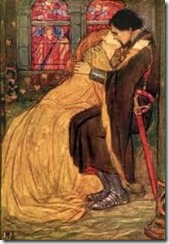
Romantic Love

To complicate matters further, millennial women are not that far removed from the influence of Daddy.  Even D.H.Lawrence’s incredibly strong and independent Ursula and Gudrun (Women in Love) struggle with issues of dependency begun in childhood.   Ursula, as Lawrence explains in The Rainbow, the story of the women’s early years, was desperately attached to her father, put up with his abuse and indifference, but dependent on his quixotic but passionate love for her, could only achieve distance and autonomy with a struggle. Both women feel they need men, but are unsatisfied with any of them.  The entire story of these women is not one of love, but love sought – a love which could only be the result of the exhausting struggle of wills between them and their partners.

Littlejohn Parker might have been an anathema to feminists – a retrograde, chauvinist Lothario with no respect for women – until they met him.  Except for the lesbian fringe of the movement, many women, while suspicious of men and unwilling to give them the benefit of the doubt when it came to sexual seriousness, were as susceptible to male charm, confidence, and pursuit as any.  His reputation, his success with women, his many lovers, and his untethered sexuality was no bar to their interest.  In fact, they were even more attracted to him.  His obvious sexuality, his clear and unmistakable interest in women as women, his respectful pursuit, and his irresistible emotional openness was irresistible.  Their heads and political agenda were turned after meeting  him.  They could no longer accept the received wisdom of the movement that men were universally hormone-driven throwbacks, apes to women’s sensitive, intelligent heroines.

Littlejohn never met his Lady Chatterley, a fictionally impossible character more expressive of Lawrence’s own frail sexuality than anything more real or reasonable; but he was never as compulsive as Lawrence was.  He simply enjoyed women, loved how they looked, behaved, and felt.  If there was to be no Lawrentian sexual epiphany in his future, there certainly would be many happy love affairs with attractive, sensuous, sexual women.

Monday, August 12, 2019

The Saga Of Portia Hamilton–What Glass Ceiling? A Tale Of Beauty, Charm, And Allure

Portia Hamilton had been a beautiful child – dark, curly hair; peaches-and-cream complexion; perfect symmetry,  and Elizabeth Taylor violet eyes.  She was cuddled, pampered, shown off and adored.  A little princess whose mother never discouraged the crinoline dresses, tiaras, and wands she wore at her ‘performances’.  Portia was never nervous or hesitant before an audience.  On the contrary, she wanted to perform before everyone, dancing prettily, showing off her costumes, her choreography (she never just twirled and jumped like other girls, but followed a script), and her music (her songs, like her dance steps were hers and hers alone).  She loved moving, smiling, dancing on tip toes, twirling so her dresses lifted and showed off their sparkles, gold thread, and pinks and purples.  She had her own dressing room – her mother’s walk-in closet which her father had set up with a mirror, good lighting, and a downstairs table; and she spent fifteen minutes fixing her hair just right with a red ribbon and ringlets, a dot of rouge and a touch of lipstick.

Image result for images elizabeth taylor

Her Aunt Mary – a single woman of late middle age who had forgone marriage for a successful legal career, a former trial lawyer who had won, according to family lore, all her cases, whose clerkship for Judge Harlow of the DC Circuit Court had paid off with a partnership at a K Street law firm and a final appointment to the bench – was unhappy with the way her sister was raising her daughter, Portia.  How, in this modern, feminist age, could she be raising a girl whose attitude and aspirations were – if she had to be honest – retrograde.  A little girl in crinoline, frills, and ribbons, never behind a book, and always primping and being pretty not only could never make it in the world of today, but was an insult to her family’s intellectual integrity.  The Hamiltons were indeed related to Alexander and were a respected Boston family which had lived and ruled following their great ancestor’s principles of freedom, justice, and personal enterprise.  There was seldom in over two hundred years, a breach of family principle or etiquette, and the Hamiltons had always been known as a family of superior rectitude, purpose, and honor. 

Image result for images alex hamilton

What had happened, Portia’s aunt wondered, to her sister who had shown as much promise as any of her four siblings, who had been destined for an equally distinguished career in the law, married well, and settled well in the right suburb of Philadelphia? And how could any daughter of hers be brought up in such a silly, common way?  All girls of her niece’s age, it seemed, bought princess outfits, and primped and pranced around the living room; but they were not of Portia’s caliber, carried none of her genes, and had no family histories of any note.  Portia, now that feminism had cleared the decks and made women’s professional and business success as probable as men’s, should by now be well on her way rather than wasting the all-important early childhood years on trifles and frivolity.

“But she loves it so”, replied Portia’s mother to her sister’s insistent objections.  “How can I refuse….and I shouldn’t refuse”.

“Why?”, demanded Aunt Mary.

“Because she has talent”.

Talent, schmalent, thought Mary.  A few pretty dresses, childish ditties, and prancing on stage don’t mean a thing  They mean diversion and distraction.  By the time that Mary was Portia’s age she was reading The Odyssey, computing, and excelling at math.  This girl had to be turned around before it was too late.

Nothing of the sort.  Portia was not to be turned and kept dressing up, making up, fixing her hair, and collecting a closet full of pretty dresses and shoes.  By the time she was in fifth grade, she was the social center of the class, precociously dispensing advice  about boys, girls, and love ‘infecting’ her classmates, according to her aunt, with outdated notions of feminine wiles, allure, and attractiveness.  By junior high, she was prom queen, dating the football captain, and a cheerleader.  Her photo and doings were reported monthly in the school paper, and she charmed her way through her classes.  She was sure to be the first Hamilton to be a disgrace.

Of course she would be nothing of the sort.  Feminism, the broken glass ceiling, clerkships, and professional marriage might be well and good for some; but Portia understood that beneath it all women were women – no different now than they were in Shakespeare’s day.  Beautiful, seductive, appealing, and above all able, thanks to their sex, best them at every turn.  It wasn’t so much that obvious, acquired intellect and cognitive intelligence didn’t matter; it was just that everyone had some measure of those, and few had her particularly sensitive awareness of femaleness and the indisputable – despite current, woke, and diversionary claims to sexual spectra – dynamics of heterosexual sex.  Lady Chatterley, Rosalind, Beatrice, and her namesake Portia were her ancestors; not the flinty, beastly ladies of Wall Street and corporate America.

Image result for image rosalind shakespeare

These women had their place, and no one could take away their pluck and determination; and without their tunnel vision of success her road would be more difficult; but no one had schooled Eleanor of Aquitaine, the wives of Richard II and Henry VI, the heroines of Shakespeare’s Comedies, Emma Bovary, Hedda Gabler, or any other of the fictional and historical women who had used their native intelligence, sexual awareness, and will to get exactly what they wanted.  The difference between Portia and these characters was her enjoyment of herself, her sexual politics, and her absolutely enormous appeal to men.

Beauty is destiny is the way one philosopher put it.  Portia would always be looked at as a model, a symbol, and an ideal.  Fame, currency, and wealth were hers for the asking from the high-end of American culture.  Given her preferences she could be a model in Milan, the wife of European royalty, or a Park Avenue socialite.  She had the physical credentials to write her own ticket in those circles who prized her type of beauty and the carriage, confidence, and presentation which always seemed to go along with it.

Marilyn Monroe was not only physically alluring, there was something about her personality which fit her body.  It was an indefinable, impossibly subtle, and completely irresistible quality of femaleness.  Men do not want to admire women.  They want them as sexual partners; and men for generations have wanted nothing more than to go to bed with Marilyn Monroe - not Ava Gardner, Hedy Lamarr, or Vivien Leigh.

Image result for marilyn monroe

Progressive social critics complain about America’s false sense of values, placing Hollywood beauty above all else and in so doing setting impossible standards for young girls.  How can a plain, simple girl possibly compete with the fantasy images of Hollywood, Elle, Seventeen, and Glamour?  She can’t.  Beauty, feminine allure, grace, charm, and winsomeness have been admired, imitated, and honored since the first human settlements.

Image result for pompeii beautiful women images Image result for beautiful women roman sculpture

Image result for images beautiful women 16th century persian paintings Image result for images nefertiti

Portia Hamilton was one of the lucky few, given unusual beauty as a surprising, unexpected gift.  From a very early age she understood who she was and what she would be and  soon realized her good fortune. She had a very successful career as a fashion model, wearing the best designer clothes on the most prestigious runways of Milan, Paris, and New York; and since beauty is indeed destiny it was no surprise that after her career she married a scion of Wall Street, lived in a Fifth Avenue apartment overlooking the Park, wintered in St. Bart’s, and skied at Gstaad.  She had led a good, charmed life.

Saturday, August 10, 2019

Keeping The Wolves At Bay–Civility, Rectitude, Principle, And The Quiet Resistance Of A Small Town

The Blanton Clarion’s first publisher, Harrison Nichols, had come to the prairie in 1920 after making his fortune in New England in lumber and shipping.  In a story out of Main Street, he had followed his love to Western Minnesota, invested his money in land, and soon was the town’s most prosperous citizen; and he, like Sinclair Lewis was taken with the town’s decency, patriotism, faith, and optimism.  Although it was, not unlike most small towns in America, somewhat insular and resistant to change – not the place for idealists or entrepreneurs – Blanton was still very American.  Its fundamental values, morality, and ethical probity were what the Founding Fathers had in mind when they formed the Republic. While the residents of Blanton looked at news from the great cities of the new America with curiosity and interest, most had no desire to leave the town in which they were born and grew up. 

Image result for images book cover lewis main street

Two generations later when Harrison Nichols’ grandson took over the paper, the community had changed little.  It had survived the Depression, the commercialization of prairie farmland which had left many small prairie towns empty and farmhouses abandoned, and perhaps most importantly the waves of social change which had radically restructured American society and reoriented the principled values that had been at the center of its life.  Resistance or opposition to these progressive waves was not difficult for Blanton because few of those with ‘alternative lifestyles’ felt any desire to go there; nor were there any minorities to speak of.  The black exodus after the Civil War bypassed them.  The Illinois Central travelled far to the east, and few freed slaves, even had there been a whistle stop in Blanton between Mississippi and Chicago, would never have chosen life on a cold, bleak prairie. 

So in many ways, Blanton was indeed ‘the town that time forgot’.  Time had shown itself to be disruptive, uncivil, divisive, and contrary; and if the town’s social perimeter had become tighter and less permeable over the years, no one was complaining.  The America its residents saw on the news was definitely not the country they recognized.  While unfailingly patriotic – Blanton boys had died in all America’s wars -  the town never wanted to join a mainstream which had become muddied and lifeless.  Residents knew that the other America was encroaching, and that soon their livelihood and way of life would be swallowed by the social waves sweeping from the coasts; but they remained in place.  There was something to the idea of place itself that held them.  Blanton was more than just a town that had lasted for over a hundred years, essentially unchanged and intact.  It was a town of generations; houses lived in by successive Hammonds, Parkers, Carpenters, and Joneses; park benches sat in by grandmothers, climbed on by grandchildren, and repaired and restored by their relatives. 

Act I of Thornton Wilder’s Our Town begins with a description of a small town in New Hampshire:

The sky is beginning to show some streaks of light over in the East there, behind our mountain.  Well, I'd better show you how our town lies. Up here is Main Street. Way back there is the railway station. Polish Town's across the tracks. Over there is the Congregational Church; across the street's the Presbyterian. Methodist and Unitarian are over there. Baptist is down in the holla' by the river. Catholic Church is over beyond the tracks. Here's the Town Hall and Post Office combined; jail's in the basement. Here's the grocery store and here's Mr. Morgan's drugstore. Most everybody in town manages to look into those two stores once a day.

Public School's over yonder. High School's still farther over. Quarter of nine mornings, noontimes, and three o'clock afternoons, the hull town can hear the yelling and screaming from those schoolyards. This is our doctor's house, Doc Gibbs'. This is the back door. This is Mrs. Gibbs' garden. Corn…peas...beans...hollyhocks…heliotrope… and a lot of burdock. And this is Mrs. Webb's garden. Just like Mrs. Gibbs'. Only it's got a lot of sunflowers, too.

Nice town, y'know what I mean?

Image result for images book cover wilder our town

Eudora Welty writes of a similar town in Delta Wedding. Although there are some strains within the Fairchild family – the marriage of outsiders Troy and Robbie are potential disruptions to the perfectly-ordered running of the plantation – none of them ever amount to anything.  The folds of the family are too welcoming and absorptive.  It is too big, too old, to established in its traditional ways, propriety, good taste, and humanity not to tame the most rebellious.

Delta Wedding is not only the story of a multi-generational, closely-knit family but its simplicity extends beyond the plantation.  Welty chooses not to write about the Civil War or Reconstruction, both of which were only decades before her story of the wedding.  The plantation is a physical and historical enclave.  The only past that has any importance for the Fairchilds is the one of their ancestors.

Image result for images book cover welty delta wedding

Sinclair Lewis, perhaps best-known for his criticism of the insular, ignorant, and self-satisfied burghers of the Midwest (Babbitt) in Main Street he is far less critical, and although he first depicts the small Midwestern town of his birth in an unfavorable and predictable light, he later expresses admiration for its energy, optimism, faith in progress, and solid values.  Any society, he observes, has inwardness – a self-protective instinct to keep disruptive ideas out – but there is a distinct value to a culture which has an undeniably moral and ethical core.

When Carol Milford arrives in Gopher Prairie she feels lost and depressed.  The town is small, simple, and unattractive.  There are no arts, no beauty, and no poetry.  It exists only because of the rich prairie land around it, the money to be made, and the services to support it.  It is a miserable place without culture.  She resists and makes repeated attempts to introduce ‘culture’ to the town without success.  It is not only insular, simple, and conservative; but obstinately resistance to change.  However, over the years, she realizes that the town’s cultural indifference is nothing of the sort.  In her desire to remake the town in her ambitious cultural image, she ignored the unique, fundamental culture of its own. A community which valued place, permanence, family, and civility most definitely had culture, perhaps not ‘high’ culture, but a a level of ethical and moral consistency which in many ways surpassed it.

Hawthorne in The House of the Seven Gables also wrote of place, permanence, and history; and although critical of the corrosive inbred nature of socially hermetic places, he could not help but see their importance.

The street in which it up-reared its venerable peaks has long ceased to be a fashionable quarter of the town; so that, though the old edifice was surrounded by habitations of modern date, they were mostly small, built entirely of wood, and typical of the most plodding uniformity of common life. Doubtless, however, the whole story of human existence may be latent in each of them, but with no picturesqueness, externally, that can attract the imagination or sympathy to seek it there.

But as for the old structure of our story, its white-oak frame, and its boards, shingles, and crumbling plaster, and even the huge, clustered chimney in the midst, seemed to constitute only the least and meanest part of its reality. So much of mankind's varied experience had passed there,—so much had been suffered, and something, too, enjoyed,—that the very timbers were oozy, as with the moisture of a heart. It was itself like a great human heart, with a life of its own, and full of rich and somber reminiscences.

Image result for images hawthorne house seven gables

‘The town that time should forget’ was the headline of an editorial in a well-known Eastern newspaper whose journalist did a feature on Blanton – a small town whose residents boasted of its principles and fundamental values but whose lily-white, conservative values were in fact racist and indicative of the white supremacy which resided throughout the country under the cover of probity and traditionalism.  The journalist, like the fictional Carol Milford, overlooked and ignored the internal culture of the town and how a community uniform in race, ethnicity, and social and religious values, need not be prejudiced. Cultural homogeneity does not imply injustice.

He was not alone, for many of his colleagues made the same wrongful assumption and worse, conflated individual towns’ experience with a national one.  All small towns are socially ignorant.  Cultural uniformity ipso facto is defiant racism. They are obstacles to progress, social justice, and progressive reform. 

The opposite is true.  The values of homogeneous societies such as Blanton or the fictional towns of Lewis, Wilder, and Hawthorne, are more representative of high culture than any more diverse.  The values of Blanton – rectitude, honor, respect, discipline, compassion, courage, and honor – have been the attributes of advanced civilizations since Greece and Rome.  The educational principles of Cato the Elder incorporated into his diptychs for future Roman leaders included this moral code as even more essential than military strategy, civil governance, or law.

Blanton should be looked to for guidance not with opprobrium and mistrust.

Some critics have suggested that the sense of place was really what gave Welty’s later works distinction; and that novels like Delta Wedding were examples of how the ‘place’ of the Delta and the Fairchild plantation was a metaphor for place and family:

Place is vitally important to Welty. She believed that place is what makes fiction seem real, because with place come customs, feelings, and associations. Place answers the questions, "What happened? Who's here? Who's coming?" Place is a prompt to memory; thus the human mind is what makes place significant.

There was indeed human mind in Blanton, and far too little outside city limits.