"Whenever I go into a restaurant, I order both a chicken and an egg to see which comes first"

Wednesday, April 5, 2017

Recipes - Pasta a la creme with Red Pepper and Caviar

Sautéed red pepper in cream sauce is excellent over pasta.  Add a bit of red lumpfish caviar, and the dish takes on a unique flavor – and color.


Pasta a la Crème with Red Pepper and Caviar  
* 1/2 jar (1.75 oz.) red lumpfish caviar
* 1 fresh red pepper, chopped 1” pieces
* 1 med. onion, chopped
* 2 Tbsp. butter
* 1/2 cup Half-and-Half (approx.)
* 1/2 cup freshly-grated Parmesan cheese
* 1/2 lb. spaghetti or spaghettini
- Sauté the red pepper and onion in butter until soft

- Turn the heat down to simmer, and add caviar

- Cook for 5 min. (no more)

- Add the half-and-half, mix well


- Serve 

Tuesday, April 4, 2017

Falling Off The Edge Of A Flat World–It Could Still Happen

Scholars in the Middle Ages knew that the world was round; and virtually all maintained the concept first formulated by the Ancient Greeks. From at least the 14th century, belief in a flat Earth among the educated was almost nonexistent, despite fanciful depictions in art, such as the exterior of Hieronymus Bosch's famous triptych The Garden of Earthly Delights, in which a disc-shaped Earth is shown floating inside a transparent sphere.


Columbus was quite sure he would never fall over the edge of the world.  Cosmology, was, however, still in the Dark Ages – Copernicus and Galileo had not yet proposed their theories – and Columbus must have had some doubts.  The promise of fame and fortune, the likelihood of only a few more years of life (life expectancy at his time of birth was only 30 and he was 41 when he set sail), and supreme confidence in his navigation and seafaring skills were enough to dispel and lingering doubts.
 
The real question however, was not about the spherical nature of the Earth but whether or not it revolved around the sun; but up until the time of Copernicus there was little debate about the issue at all.  If there ever was received wisdom, it was that the Earth was not only the center of the solar system but the center of the universe.  All scientific conclusions were based on this assumption.


Not only were scientists, academics, and philosophers convinced of this particular cosmology, but common people understood it on the most basic level.  It was obvious that the sun moved from East to West, came nearer to and farther from the Earth, was responsible for the seasons, storms, and fair weather. 

The intellectual and the intuitive were one.  There was no debate, no confusion, and no doubt.
However, Copernicus’ De revolutionibus orbium coelestium in 1543 and Galileo’s equally important treatise some 80 years later, threw the the entire civilized world into scientific, religious, philosophical, and cosmological turmoil.

Not surprisingly it took decades for the ideas of Copernicus and especially Galileo  to be accepted by the Church which had based its divine cosmology on an earth-centered universe.  After all God chose to send his Son to earth which therefore had to be the center of His creation
The matter was investigated by the Roman Inquisition in 1615, which concluded that heliocentrism was "foolish and absurd in philosophy, and formally heretical since it explicitly contradicts in many places the sense of Holy Scripture." Galileo later defended his views in Dialogue Concerning the Two Chief World Systems, which appeared to attack Pope Urban VIII and thus alienated him and the Jesuits, who had both supported Galileo up until this point. He was tried by the Inquisition, found "vehemently suspect of heresy", and forced to recant. He spent the rest of his life under house arrest (Wikipedia)
It is hard for anyone living today to imagine how revolutionary the conclusions of Copernicus and Galileo were.  The bombs of Hiroshima and Nagasaki ushered in the nuclear age, but at the time few realized or were even concerned about its implications.  The US, with expected genius and ingenuity had simply developed a very powerful bomb and with it ended the war.


The telephone changed the nature of human communication – personal social interaction became less important, but life became more efficient and more extensive.  By the time it became universal, people had gotten used to its utility and had forgotten their concerns about community integrity. 
Few people had any idea about the impact and implications of the computer and even fewer could have imagined the coming  interface between mind-brain and the computer which will revolutionize human communication and interaction and the nature of reality itself. 

Similarly few Americans had any idea how recombinant DNA would facilitate the reconfiguration of the human genome.  Man, not God or random selection, will soon be the final arbiter of individual human design. 


Both discoveries – modern communications and the malleability of the human genome – are truly revolutionary.  Virtuality will replace reality, physical limitations will no longer constrain the human mind, and human nature itself will be reconfigured again and again as easily as designer clothes.

However the Copernican revolution of 1543 was different, more fundamental, and more existential.  All modern technological inventions have been either outgrowths of previous inventions or in some cases steps of genius or insight.  Because of their inevitable impact on the fundamental nature of human life, they are indeed revolutionary; but they are insignificant compared to the complete and absolute overturning of the basic fundamentals of human belief which came without warning or preparation in 1543.

Our revolutions are incremental, slow, and progressive.  There is nothing earth-shattering about each new step. The state of virtual reality began decades ago in primitive form; has now evolved, thanks to cybernetic and the power of super-computers to a very believable alternate perception; and will ultimately evolve to a state where there will be no discernible difference between virtuality and reality. 

Our ability to determine our own genetic destiny – not just physical configurations but types and levels of intellectual ability, creativity, and spiritual mediated through genetic manipulation – began decades ago with the decoding of the human genome and the first simple experiments with cloning and simple genetic engineering of plants.  We are in the midst of two of the most events in human evolution, and we are hardly aware of them.  They began long ago, came slowly and unobtrusively, and are now part of human life and expectations.

Imagine the world before Copernicus – a world where the sun always rose and set predictably.  Its course was predictable, seasons came and went accordingly, and there was no questioning of the cosmological, universal, spiritual order. Before Copernicus the world was fixed, stable, and the center of all things. 


After him, not only were the intellectual foundations of the relationships between human life and the rest of the universe forever altered, but the Earth moved.  It was traveling through space propelled by some unknown force according to unknown physical laws.  If the Sun were the center of the universe, with complete control over the Earth, then what other powers did it manifest? How many other Earths might their be?

Of course it took many decades for these new ideas to be widespread and universally accepted; but in the first century after Copernicus the intellectual, philosophical, scientific, and religious world was set back on its heels, forced to refute an idea which was the very antithesis of every canon in the world.

Man was no longer so important, the revolution said.  We may have been created by God but he also created a limitless, endless universe of infinite possibilities.   Nothing since has so questioned the very nature of humanity and its place in the universe. While Jesus was sent here, he might well have been sent to a billion other planets as well.  God might be completely indifferent – or better, equally indifferent – to the fate of both those who live on Earth and those scattered elsewhere.

If it is confirmed that we are not alone in the universe – that we share it with billions of other intelligences; that our humanity is not a result of God’s plan but that of some other architect; or that our very existence is fictional and that our lives are no more than invented tales and amusing stories – we will suffer the same existential fate as those living in the days of Copernicus.

Perhaps the shock will be less for us than for those who lived in the late Middle Ages.  They never saw the revolution coming; but at least we have already anticipated it.  Speculation on the existence of life on other planets is common and universal. 

If another intelligence makes itself known, we might be less surprised than frightened, curious, or finally accommodating. 

More than likely, however, the dimensions of this intelligence will be so unfathomable, so unexpected, so completely alien to human thought or imagination that we will be able to do nothing but worship it.

How will we react if our profound belief in our God, his Creation, his dominion, and his salvation is challenged by unimagined discoveries about the universe, the nature of being and divinity?

On the other hand the next revolution might be Copernican in nature.  We may discover that we are governed by laws that defy physics, relativity, or quantum theory and are far more fundamental; or that we are integral parts of something far larger and more universal than that described by current definitions of existence.


In either case we will be as unready for the revelations as Europeans were in 1543.  It is one thing to correctly anticipate the trajectory of scientific, social, or philosophical trends.  Another thing entirely to cope with the implications of a universe turned on its head.

Saturday, April 1, 2017

Human Nature, Sexual Dynamics, And The Import Of History–Time To Disengage From Politics And Temporal Concerns

Yes, we live in troubled times.  No one would have thought that the cradle of democracy would have produced such offspring.

And who would have thought that after ‘The End of History’ – the finality of the Cold War and the resurgent supremacy of Liberal Democracy – that  the likes of Bashir el-Assad, the Ayatollahs, Kim Jong-Un, and Vladimir Putin would be ascendant?

Had anyone been paying attention to the Balkans – how long-repressed antipathies, hostilities, and resentments would resurface unmitigated after 50 years – they would not have been surprised at the violent emergence of ethnic and religious animosities. 


Why is it a surprise that radical nationalist populism is sweeping Europe and the United States?  How is it that anyone paying attention could have neglected the rising resentment of the middle class –the class marginalized by progressive insult and insistent interventionist programs to neuter traditional religion and family values?

Perhaps; but a longer perspective of history belies the anxiety of the moment.  Kings, queens, courtiers, and the aristocratic elites of Europe, India, and China have always behaved in a patriarchal, self-interested, and aggressively territorial ways.  There is nothing new in the rise of Donald Trump, Vladimir Putin, or Marine Le Pen. 

Bourbon royalty wanted nothing to do with rabble and paid for their disdain at the guillotine.  Trump, Le Pen, and Putin want the same heads and the same revolution.
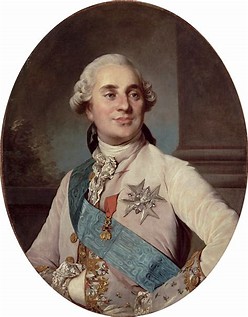


With the exception of Putin who, it would seem, would be quite happy to assume the royal throne of the Tsars, the rest of Europe and America is restive, angry, and in the mood for dramatic democratic reform.

The world it seems has never been in such chaotic flux.  The very foundations of Western civilization – liberal democracy, Enlightenment principles of rationality, dispassionate inquiry, and logic – seem to be disassembling.  There are no longer any absolutes – the Bible, the Church, or the received wisdom of the French and American Revolutions – and an individualistic, self-centered, me-positivist culture is in its ascendancy.

Of course nothing could be further from the truth.  Historians have known for centuries that history not only repeats itself but does so in predictable, repetitive patterns.  The cycles of aristocracy-democracy, populism-autocracy, nationalism-internationalism have repeated themselves over and over and so frequently and predictably, that they yawn at every ‘new’ emergence of the same old things.

Social scientists have noted since the beginning of their discipline that human societies do not change.  They exhibit the same expressions of self-interest, territorialism, and hegemonic  demands as  every cultural era before them.

Social psychologists have understood since Oedipus that human nature rules human action.  We all are governed by the same genes that propel us to jealousy, suspicion, hatred, and internal homogeneity. 


The question, then, is why the angst, the dislocation, and the frustration?  Why is it that in full consideration of history we still take umbrage at political venality and  sabre-rattling  nationalism?
The works of Conrad Tolstoy, Dostoevsky, D.H. Lawrence and many others have given us reason to pay no mind to temporal, inane concerns.  Gudrun, Ursula, Birkin, and Gerald have little concern for events, nor for public consideration of them.  They are only concerned about themselves.

Neither Gudrun, her sister, nor their male friends are sympathetic characters.  They are diffident to say the least and indifferent at worst to the lot of ordinary people.  They are islands unto themselves, often adrift, looking for mooring, but so antipathetic that few readers will care if they ever make it to port.

But at least they have considered who they are; and most importantly have understood that self-definition can only come through a battle of wills – who is victorious and who lies down in defeat.
They all – Birkin, Gerald, Gudrun, and Ursula – want nothing to do with the world around them.  The confining, defining, limiting, and oppressive society into which they were born.

They all resolve their inner conflicts for better or worse.  They are selfish and antipathetic; but Lawrence is deliberate about his characterization.  The reader is not supposed to like Ursula, Birkin, or their group.  They do not like us; and we don’t like them; but their final resolution on sexual grounds – domination, submission, gratification – is essentially ours.  There is no resolution other than personal and sexual.


Tolstoy for most of his life searched for answers to being, eternity, and meaning; and of course found no answers; but at least he was concerned with issues of life and death.

Conrad was only concerned with jungle and sea and the existential challenges they posed.   Heyst, Lord Jim, Kurtz, or James Wait fled society and  not tried to accommodate it. They all met untimely and perhaps deserved deaths because of their stubborn embrace of it.

Tolstoy, despite his A Confession, was a life-long nihilist who challenged anyone to show him meaning; but in the end made peace with his demons and agreed that ‘there might be something’.
Dostoevsky was even harsher and more critical of the status quo. Christ sold us all a bill of goods, he said, promising the chance of salvation – not the guarantee – for faith and obeisance.  We all want only mystery, miracles, and authority so we reject his revelation and are doomed to a short life of solitariness, brutishness, and nastiness.
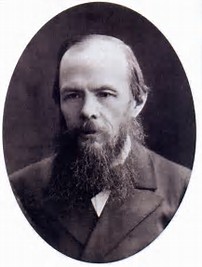


The point is that there is far more to life than temporal concerns; and absolutely little to be gained from temporal engagements.

Whatever one might think of Donald Trump, Hillary Clinton, or Barack Obama, such concerns are irrelevant, disposable, and uninteresting.

Of course no one is ever focused exclusively on existential concerns; but it is hard to dismiss them entirely.   ‘Why are we here?” doesn’t parse well with “Is Donald Trump a good President”.  Anyone with a narrow or even clouded window into history understands that politics are temporal, excusable parts of human denouement, but nothing more.

Undue attention paid to politics or current social events are only likely to confirm prior observations.
Does that mean that we are closed-minded  and only self-affirming in our judgments?

Not at all.  Shakespeare understood it best.  He knew that his Histories, although individualized fables of famous men and women, were only tales of repetitive history.  Kings, queens, courtiers and peasants all always acted the same and always would.


The point is context.  It serves no purpose to conclude anything on the basis of temporal factors.  Today’s predominant issues of race, gender, and ethnicity are irrelevant when considered in the light of historical context.  Conrad, Shakespeare, Lawrence, Ibsen, Faulkner,  Joyce, and others used contemporary context only as a backdrop for their fundamental dramas. 


The more cacaphonic politics becomes, the more urgent the need to disengage.