Dr. Augustus Johnson, a black man and professor of Systematic Theology at a well-known Divinity School was well known for both his theology and his inclusivity. He had been hired to reform Methodist teaching of the Bible, right the wrongs that had been perpetuated for decades, and make the teaching of Jesus Christ relevant and reflective of today’s diverse society. Behind his lectern was a portrait of a black Jesus, ebony-skinned, African-featured, and not suffering on the cross but looking angrily and proudly at the observer.
On the first day of classes, Dr. Johnson took his place in front of a packed lecture hall, adjusted his papers, and said, pointing to the portrait behind him, “This was the real Jesus”. He then turned on the overhead projector and flashed a series of familiar white, classically handsome images of Christ. “Not these”, he said.
Discussing the influence of Greek thought on the work of Origen, Irenaeus, Clement, Augustine, and other early church thinkers, Dr. Johnson advised the class to remember whose these Greeks were. Both Aristotle and Plato were white, slave-holding members of the aristocracy, and their intellectual contributions to the origins of Christianity must be discounted, for they deprive Jesus Christ of his Mosaic roots, his Judaism, his poverty, and his ethnic identity.
Of course Aristotle was privileged, otherwise he would have been a slave, not an educated aristocrat. Of course he was male and white because for centuries before and after Greece, this sexual and racial pre-eminence was the norm. In other words, his social position, status, and relationship to the rest of society is irrelevant to the evolution of his philosophical thought. His cultural milieu affected non-academic aspects of his life as it would any man. Aristotle encouraged Alexander toward eastern conquest and his attitude towards Persia. At one point he counsels Alexander to be "a leader to the Greeks and a despot to the barbarians, to look after the former as after friends and relatives, and to deal with the latter as with beasts or plants". Aristotle was not surprisingly ‘ethnocentric’, a product both of his age and his social class; but one would be hard put to find traces of this ethnocentricity in Metaphysics. His genius was in his ability to look at the world in terms of abstract, universal principles.
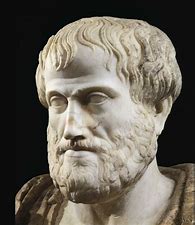
Nevertheless, Dr. Johnson hammered away at his central theme. Since all ideas emerge from within a social, economic, and cultural milieu, race, gender, and ethnicity are the elements which define them. One cannot look at the products of philosophers and judge them only for what they are but how they were derived. The milieu becomes more important that the ideas themselves. In Dr. Johnson’s view, Jesus was just a black man suffering at the hands of white Romans and Jews, and his message was one of racism, white supremacy, and the inherent corruption of white culture.
Augustus Johnson was not alone in his revisionism. In the first class on the Old Testament, the instructor made it clear that students were to ignore critics writing before the Twentieth Century, for their criticism would necessarily ignore race, gender, and ethnicity as determining factors in Biblical interpretation. Only with a modern and more enlightened perspective could one possibly understand the Bible and its continuing relevance to today. In one instructional fiat the instructor swept away any notion of historical relevance.
Christianity, according to these instructors had less to do with the complexity of the Trinity, the redemptive meaning of Christ’s suffering on the cross, the intellectual legacy of Aquinas and his Summa Theologica, and the evangelism of St. Paul than it did with the poverty of Palestine, the oppressiveness of Roman rule, the arrogance and treachery of the Jews, and the final glory of the black man.
This same revisionist exercise is replayed ad nauseam in secular universities throughout the country. Ancient Greece and Rome and the Western civilizations derived from them are irrelevant to the issues of today.
Louis XIV of France, the Sun King, social reformer, patron of the arts and culture, supported Molière, Racine, Pierre Mignard, Antoine Coysevox and Hyacinthe Rigaud, making their works famous throughout Europe. He founded the Académie Royale de Danse in 1661 and the Académie d'Opéra in 1669. Thanks to Louis France was able to establish colonies in the Americas, Asia, and Africa during his reign, and by the 1680s, France was a major power not just in Europe, but in the whole world.

The great kings of England from Henry II to Henry VIII established English sovereignty, reclaimed foreign land, and ruled over an increasingly united kingdom. The kings and queens of Holland and Spain, the Holy Roman Emperor, and centuries of powerful and influential popes consolidated and expanded European Influence and culture throughout their empires. The era of Spanish, Portuguese, English, and French exploration opened new lands to Western civilization, language, culture, and religion.
The campaigns to derogate whites and to raise non-whites to higher cultural significance are attempts to right a listing cultural ship. The contribution of white people to Western culture, say progressive activists, has been carried out on the backs of the poor, the enslaved, and the marginalized. Notre Dame, Chartres, Salisbury, the Coliseum, and the temples of Persepolis cannot be counted as positive investments in human development, but examples of exploitation, plunder, and abusive power. In other words, there can be nothing white worth noting, since all white achievements are tainted. The entire white race from its earliest beginnings to its sad and sorry end has been corrupt, pernicious, and dangerous.
Not only are the accomplishments of white civilization questionable, but the legacy of the white rule, empire, and political hegemony is like original sin - an innate corruption passed on from generation to generation ad perpetuam. It is about time to reject white history once and for all and to restore racial equilibrium, say social justice advocates.

Yet history is not so easily erased. The facts of empire cannot be expunged simply because they are looked at through a different lens. History is the story of empire, wealth, and high civilization. America is the beneficiary of European civilization, founded by Jefferson and his colleagues on its intellectual and moral principles.
The concept of ‘toxic whiteness’, an attempt to blame historical white rule for society’s current ills and to assume an innate moral corruption of whites because of their heritage, is the last, most desperate accusation of a political movement which has little intellectual foundation except the vague notion of ‘multiculturalism’, an ascribed value without the philosophical underpinnings.
Only in America do we have a pernicious desire to not only to forget the past but to expunge it from history. The only reality is today’s reality, progressive reformers insist.
American multiculturalists would like to consider themselves latter-day French revolutionaries, but they have little of the Europeans’ cultural imperative. They have no substantive vision of a true structural reform, but only one of vague aspirations. They have never demonstrated or proven the inherent value of a culturally inclusive plurality. The original American ideal of democratic heterogeneity – all newcomers are welcome if they subscribe to the Founding Fathers’ notions of enterprise, discipline, family, God, and country – was based on the lessons of history and the philosophical principles of Greece and Rome and adopted by the Enlightenment. Contrary to progressive idealists, not only is there no higher value to a society based on racial heterogeneity per se – i.e. without subscription and adherence to universal norms and a Judeo-Christian ethos – but that peculiarly narrow understanding of foundational democracy is debilitating.

What does blackness, homosexuality, or gender have to do with higher moral enterprise? Such attributes are superficial characteristics only, and have nothing to do with foundational moral principles. Cato the Elder, a Roman educator, taught the future leaders of the empire not only the practical elements of leadership – strategy, management, organization, rhetoric, and policy – but the moral ones. Rome would never survive without a grounding in the moral principles of honesty, courage, discipline, compassion, respect, and honor. These principles were most important for Rome’s leadership, but essential for all. Modern China is still based on Confucian moral principles – an ethos, a philosophical foundation on which the society can be governed and prosper.

It is respect for and adherence to these fundamental principles which should guide America. Traits of gender, race, and ethnicity are superficial, secondary, and insignificant relative to them.
The idea of whiteness as an evil in and of itself is an outgrowth of this myopic focus on multiculturalism. It is not surprising that those who have raised ‘inclusivity’ to a higher moral order by fiat alone – that is without philosophical or historical grounding – are now vilifying those who are assumed to be its enemies. It is not enough to demand a just, fair, and equal society as Jefferson, Adams, and Franklin did; but to play a perverse zero sum game of racial politics. Only if white people are marginalized, dismissed, and removed from cultural importance can minorities thrive.
Dismissing white European civilization as nothing more than an incidental, valueless bit of history denies its foundational values. It is no coincidence that all great cultures, both East and West, share the same principles. Cato the Elder and Confucius are only two examples. Respect for the past does not imply a vain hope for a resurgence of white supremacy in an age of threatening multiculturalism, but a validation for historical, universal values.
Educators, intimidated by punitive progressive ideology, are hesitant to speak in other than critical terms of America’s white, European past. They have been indoctrinated, brainwashed, and threatened. Any mention of historical legacy without couching it in terms of race, gender, and ethnicity is considered heretical. One may refer to kings, queens, shahs, emperors, and shoguns but only if their predatory, racist, supremacist intentions and actions are central to the discussion.
The two Blooms, Allan and Harold, have made their voices heard on the importance of Western civilization and its necessary focus in American education. Allan Bloom, author of The Closing of the American Mind delves into what he believes is the "Great Books" dilemma. He believes that the "great books" of Western thought have been devalued as a source of wisdom—but more importantly, that "our students have lost the practice of and the taste of reading". Because of this, students are unable to derive their beliefs from evidence, from central texts, or any print source at all. Bloom contends that without an understanding of important older texts, such as Plato's Republic or Machiavelli's The Prince, modern students lack any reference point with which they can critically think about or address current events. Students are instead left with vague and abstract ideas of "good" and "evil".
Harold Bloom in his The Western Canon assails "the current disease of moral smugness that is destroying literary study in the name of socio-economic justice." He loftily derides the notion that literature either has a social mission or can profitably be discussed in its own social and historical context. For Bloom, literary interest is always a question of artistic merit, which rests on the degree of "literary individuality and poetic autonomy" a text achieves.

The American progressive Left is not content just to ignore history; it intends to expunge it from education and society. The cancel culture is determined to erase any and all who they consider tainted by ‘racism’, a catch-all phrase to include all offenses against women, gays, and ethnic minorities as well as blacks. Under that deformed rubric, all American history is tainted; and no period is exempted from censure. All wars are capitalist adventurism, the market economy is ruled by Wall Street predators, Westward Expansion was the deliberate annihilation of indigenous populations; the arts are continuing vehicles for white elitism; and education is the academic version of the slave plantation.
Let alone the great monarchs and thinkers of Europe, America’s Jefferson, Hamilton, Franklin, and Adams – a genius cluster rarely found in any period of history and men of character, insight, intellectual brilliance, and political influence – are dismissed, relegated, and ignored.
This trend cannot continue and will not. Despite the insistence of the Left that they are are the arbiters of culture and the guides to a better world, they are retrograde and destructive, autocratic, arrogant and intellectually illiterate. They cannot last.


 Posts
Posts

