"Whenever I go into a restaurant, I order both a chicken and an egg to see which comes first"

Monday, November 26, 2018

The Dictates Of Fashion–The Way We Look Is So Much More Important Than Who We Are

Much is made of ‘identity’ today, specifically our race, gender, or ethnicity.  Such categories can determine where we go to school, where we work, what government support we receive, and which political party is the most congenial to our interests. Yet such categorical identity goes much deeper.  Being gay or black does not simply place one firmly in the Democratic camp, or assure quick recourse to the judicial system in case of grievance, but is the most defining aspect of character, outlook, and personality.  More than an artist, a geologist, a social worker, or a teacher, a black man is first black; a gay man first gay.

From a narrow political perspective, this makes sense.  Changes in laws, public perception, and civic attitude require solidarity.  There can be no so-so gays in the fight against homophobia; no diffident blacks in Black Lives Matter; and certainly no complaisant, Lawrentian women in the MeToo movement.   In other words, to the modern political activist, Sartre was wrong.  Existence does not precede essence but the other way around.  One must start with a predetermined model of being and then let individual purpose, activity, and intent shape it.   One is first and foremost black, gay, female, disabled, or Latino.  Anything else by way of individual preference, ability, purpose, or desire is secondary, irrelevant or at best is to be sorted out later.

This collectivism – the desire to fit everyone into a few, secular, predetermined categories for political reasons – runs counter to American history.  Eighteenth Century Enlightenment spread quickly from Europe to the America with its new premium placed on reason and individual intellectual enterprise, all in service to God.  The Enlightenment in turn had been influenced by Martin Luther and his insistence that a man’s relationship with God was his own personal matter, mediated by no one, and influenced by no institution.   The American Republic, then, began with a firm belief in individualism expressed both in secular terms – hard work, discipline, enterprise, and ingenuity – and spiritual ones, an intimate and fulfilling personal relationship with Jesus Christ.

Martin Luther

It is not surprising that with the growing complexity of American society that this hard, Puritan individualism has lost much of its rigor.  It is not enough in an unremittingly competitive world to simply ‘be me’.  One needs accoutrements, add-ons,  to make a distinction.  Fashion was the easiest way to help one to express personality and character.  Top hats, high heels, jewels, and brocades not only set the standard for high society, but created a multi-layered system according to which people were identified by sub-class. Top hats in style but made by a lesser craftsman were of lesser social value.  High heels which imitated the lift, grace, and fit of the very best, but never quite completely were ignored.  Anyone with the real thing would know immediately that these imitations belong to the ever-aspiring, never attaining  hopefuls beneath them.

Christine Mannon

As one descended the scale, differences became more and more obvious, until people gave up imitation entirely; wore what they could afford, what was practical and could last, and Park Avenue be damned.  The workers of the world were united less by their social solidarity than by their clothes.  While in America there were never any such obvious distinctions such as classic French blue laborers’ overalls, work boots, dungarees, work gloves, and flannel shirts were just as distinguishing.  Fashion in America just as in Europe,  Ancient Egypt, or Mauryan India has always been the signifier of class, caste, and status.  Indian peasants wore dhotis, lungis, and nothing else; and the Rajah of Bikaner was caparisoned with gold, jewels, and finery.  

Except for peasants, no one had to wear the trappings of class; but in addition to practicality (clothes that did not wear out easily), people wanted some distinguishing, easily-identifiable mark of status, regardless of how high or low it might be.  Whether workday overalls and smocks; or Sunday-go-to-meeting finery, clothes made life easier.  If everyone lived in a society where clothes were not worn, the effort it would take to distinguish one person from another would force a greater degree of forthrightness if not honesty than in any clothed one.

Not only would there be no personal showpieces in a naked society, but no tools of expression – no pussy hats, balaclavas, S&M leather and chains; nothing at all to show collective identity.

Worst of all would be the realization that despite claims to the contrary – erudition, talent, ingenuity, humor – people are all basically and fundamentally alike.  The same human nature  exists – make, model, and serial number - in everyone.  A persuasive speaker without his Armani suit, Jean-Luc haircut, Italian moccasins, and Dior tie would have trouble rising above his words.  Only clothes and the impression of authority the confer give meaning.  Circus outfits, theatre costumes, riding finery, baseball uniforms all give legitimacy and identity.  Even Ingres’s naked odalisque wore something.

Ingres odalisque

Mao Zedong understood this well.  A truly and purely Communist state could have no class distinctions.  Every Chinese must not only think, speak, and act in socialist terms, but dress with no personalized, individual, characteristics.  Mao knew that adherence to his radical policies and acceptance of their consequences without question meant complete solidarity.

Of course once Mao had been laid to rest and the new China born again, clothes returned to their more normal, more human, and more socially identifiable role.  While never as exaggerated as Korea, Japan, or the United States, Chinese fashion underwent a resurgence.

The Sixties, a radical progressive era, eschewed fashion not only as disguise – the essential ‘me’ could never be discovered if greasepaint and makeup were laid on too thick – but as an expression of conservative capitalist culture.  Hippies denounced traditional fashion.  Anything second hand, borrowed, used, natural or put together was acceptable; anything mass produced or inspired by the runways of Milan or Paris was disparaged.  Of course hippies ironically were endorsing the legitimacy of fashion.  It was just that their fashion was ‘anti-fashion’ and acceptable.

Feminists of the same era disavowed women’s fashion for the same reason – it detracted from a woman’s essential nature and being.  Fashion was a perverse disguise designed and promoted by male oligarchies and to be avoided at all costs.

Of course neither movement’s fashion radicalism lasted for very long.  Women are back to sexy, alluring, come-hither fashion, and men are even more interested in looking good and making a unique personal statement of attractiveness and desirability.

A historical look at women’s fashion shows remarkable consistency.  Women from the age of the Pharaohs to the present day have dressed elegantly, with sophistication, and with all the same techniques – jewelry, eye-liner, make up, lipstick, and and array of finely- tailored clothes.

There is little difference from his elegantly dressed New York woman and Nefertiti.
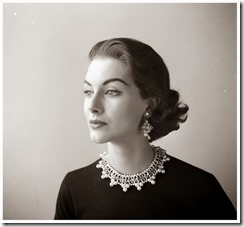
Beautiful Black & White Photos of Women in Old-Fashioned, ca. 1940's (7)

This Venetian mask of classic female beauty and fashion reflects a surprisingly familiar standard of female beauty and an appreciation for a particularly fanciful but tasteful style and fashion. 

Venice Mask II

Fashion, like any other style, fad, or movement quickly evolves; and despite some fundamental, historical principles of beauty, is always changing.  What women wear today is very different from what they wore two hundred years ago, but the principle is still there – to look good, to enhance and individualize one’s common human nature, and to be distinguished.  Belonging to groups, movements, or causes is social fashion.  When one puts on the finery of environmentalism, women’s rights, racial equality, or peace, the effect is the same.  Wearing the same basic mantel, personalized with simple touches, feels good.  Stepping out with friends looking good, dancing to the same orchestra, dressed in the same social style.

Few of us want to face who we are; and it is far easier to look good or to dress in the collective finery of a movement than to look inward, to assess moral conviction, spiritual evolution, or  personal failings.  In a way it is a good thing that we take pride in our personal appearance, want to look good, to see and be seen.  Fashion is art; and who would deny a little more beauty in the world?

Sunday, November 25, 2018

A Life Expectancy of Thirty-Five–A Young, Beautiful Society Without Old People

The Water Inn is a resort on Carter’s Creek, one of the many inlets emptying into the Rappahannock River, and from there only two miles to the Chesapeake Bay.  In its earlier days guests were almost exclusively from Alexandria and Richmond, descendants of Southern aristocrats, Virginia cavaliers, and the First Families that settled the Tidewater and the Northern Neck in the 17th century.  The Inn was itself a place of Southern gentility and manners – gentlemen dressed for dinner, the maĆ®tre d’ greeted every family personally, with a smile for the children and an arm for their grandmothers.  The waitresses were all descendants of freed slaves who had never left the region after Emancipation, and all had been at the Inn for at least twenty-five years.  The management treated them well, they served with care and respect, and were paid well.

Chesapeake sunset

The food was Southern – roe cakes and spoon bread in the morning, peach cobbler in the evening – the view over Carter’s Creek panoramic thanks to the high promontory where the inn had been built in 1920, the drawing room sedate and well-appointed, a fire in the fireplace during the cold, and rooms with balconies that looked over the water to the small marina where the River’s watermen returned after collecting the day’s catch of oysters.  The days of artisan oyster farms were far in the future, and throughout much of the Inn’s history, the watermen dragged the river for ‘natives’, large, succulent oysters that often grew to twice the size of the farmed variety.

The River Inn in the 50s and 60s had been a family resort; but other than croquet on the lawn and board games in the drawing rooms after dinner, no special attention was paid to children.  They simply accompanied their parents, ate meals with them, sat on planters’ chairs overlooking the water, and rode with them on the Miss Laura, a teak and brass antiquity built in 1904 as a ferry from Richmond down to the Northern Neck.

In the years since those very Southern days, the Water Inn changed little.  The rooms were brightened, the curtains changed, new upholstery on the armchairs in the foyer, and younger staff; but it was fundamentally the same place it had always been.  For that reason older families kept coming down and spending long summer weekends, Thanksgiving, and Easter.  New management was understandably concerned about the age profile of the Water Inn – the old patrons would no longer be alive; and unless some effort was made to attract a younger crowed, the resort would have to sold to a developer who would radically change it – but the holding company thought the Inn still had enough cachet and quiet appeal to attract a less aristocratic but still conservative and tasteful crowd. 

Chesapeake sailing

Yet the only young people who came to the Water Inn were the adult children of guests who had been coming to the Northern Neck for 50 years.  For the most part, the Inn was a place for very old people, people who needed help getting up the steps, getting plates of oysters and roast beef from the buffets, and who went to bed very early.  The Inn was still pleasant, attractive, and welcoming, but it had become geriatric and depressing.

William Robbins was one of those old people who had been coming to the Water Inn for thirty years; but rather than feeling at home with those of his generation, he felt disoriented and irritable.  Why did we live so long? Not only were old people changing the character of the country by their very numbers, their votes were increasingly influential; and Congress, dutifully aware of demographics of their constituencies, awarded them with the tax breaks, the benefits, and the overall use of public monies which favored them.

Why indeed? What purpose did old people serve?  Adding wisdom and good counsel?  On the contrary, most older people became more hard-bitten and resentful of change the older they got.  Their sage advice was to return to the days of their youth when society was saner, more respectful, and more dutiful and to warn of forgetting its lessons.

Was the value of old people a living link to family history, an oral tradition where stories were told at Christmas time about ancient relatives? What inherent good was that?  What other than passing genealogical interest were those stories worth?  Wasn’t there far more for children in Uncle Joe’s stories of space colonization, time warps, black holes, and the post-human generation than in Uncle Bob’s tales of the poverty of the Mezzogiorno and life on the Lower East Side?

Didn’t old people simply get in the way?

What was it like to have lived in a society where few people lived beyond thirty-five? No wonder why the human body was so admired in Ancient Greece and Rome, why Marathon, the games, and displays of physical ability were so popular.  Beauty, youth, vigor, and style were perennial and permanent.

Yes, but what about early death?  Thirty-five was but a fraction of what human longevity could be.
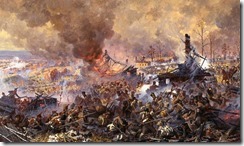
On the contrary, early death simply meant a different death.  Death from an infected toe at 35 was no different from a glorious death on the battlefield, but certainly less valorous.  In today’s risk- and casualty-averse age, it is impossible to imagine the Battle of Borodino when 70,000 Russians and French soldiers died in a single day.  Tolstoy captured the ordered chaos of war better than any other.  In the midst of cannon fire, horrific injuries, and almost certain death, men were happy – a final camaraderie, death as it should be, not as it most often miserably was. It is only those who have a long life expectancy who worry about dying early.  It is our right to live a span extended by modern science and medicine; but it is the fate of the long-lived to have time and means to consider death and consider it unhappily.  Longevity makes old-age even that more unappealing.  Not only have old people outlived their usefulness, they are walking reminders of the inevitable.

Borodino

Of course those who lived a millennia ago were just as conscious of death and dying as we are today, but attuned to a very different philosophical barometer.   At age sixty today, one must consider the traumas and extended miseries of thirty more years; and thirty more years of what?  No glory, no recognition, no parades – just a long, slow, and progressive descent into disease and senility.   At at age 25 in Ancient Greece, a short, happy life was the ideal, to be led with equally happy, beautiful companions.  The end of life was closer, more abrupt, less protracted, and less noticed then.  Death was more a part of life than it ever is today.

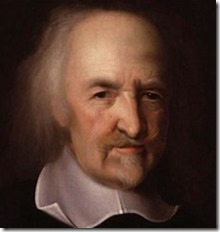
Of course for most citizens, Platonic Greece was just as Hobbes described it – solitary, poor, nasty, brutish, and short – but that did not deny the  prevailing culture of youth and beauty - the ideal, the highest expression of culture passed on down to us.

Hobbes

So what to do with us old people today?  We are society's legacy, for better or worse.  Few of us ever thought that the technological advances of the post-WWII boom would lead to this.

Of course we are not that much of a bother and for the most part stay out of the way.  We teach each other in adult education classes, volunteer together, and socialize together and turn up for holidays. 

Only in the distant future will technology finally figure out how to do away with aging, old age, and old people.  Perhaps a society of forever 35-year olds is in the cards, a return at long last to the days of Greece and Rome; but for the time being we are in it for the long haul, a slow march to the end of the tunnel, hoping for epiphany, knowing better, clinging to what we know and hopelessly unprepared for the final reckoning.

I’ll Have What She’s Having–The Sexual Ecstasy Of Lady Chatterley

Sexual ecstasy did not come easily to Connie Chatterley, the main character of D.H. Lawrence’s novel.  According to Lawrentian philosophy true sexual ecstasy could only come from a mutual partnership, one in which dominance and submission have been equalized, male and female character finally and independently expressed but never lost in sexual intercourse.  In Women in Love, Ursula and Gudrun both struggle with issues of will, dependence, and emotional freedom.  They constantly test their lovers, Birkin and Gerald, and never rest until they feel they have found, sexual equilibrium and the right sexual partner. 

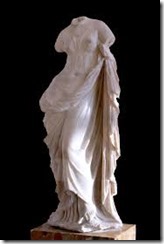
Aphrodite

Gerald and Birkin must prove themselves; but since neither Ursula nor her sister know what they are looking for – what the ideal man would look like – it is the struggle alone with which they become obsessed.  Birkin is intellectual, but windy; sure of himself but in a presumptuous way.  He claims he wants to know more about life and its meaning, but flounders and is caught in Lawrence’s eternal dilemma.  Intellectual pursuits, while characteristic and essential parts of human existence, are chimeras, for they divert men and woman from realizing their equally important non-rational, emotional potential.  Sensuality and the pursuit of physical expression is equally misleading.  African paganism, as tempting as it is as a pure expression of sexuality and sensual being, can only lead to delusion.

African mask

Gerald is diffident and distant; alone, confused, and unhappy; but later in life he rejects indifference and inaction, and takes over his father’s failing collieries and makes them profitable.  He rejects his father’s compassion and consideration for the miners and thinks only of reforming the company into a model of absolute willful, laissez-faire capitalism.  Through this expression of practical will, Gerald believes he can become a man and the man that Gudrun wants.

Birkin flounders in ideas, emotionally attached to them, but never completed by them.  He is the early model for Connie Chatterley’s crippled husband, Clifford, who because of his infirmity, believes that ideas and the words that express them are of a higher value, a more perfect ethic and the only means to redemption and salvation.

The women are no more convinced or certain than the men, and fluctuate between extremes – religion and promiscuity, love and hate, desire and rejection, dominance and submission.  In such a world of conflicted emotions, spirit, and physical desire, there can be no Lawrentian sexual epiphany.

And so it is for Connie Chatterley at the beginning of her story.  Shortly after her marriage to Clifford, a wealthy English aristocrat, he is brutally and severely maimed in the war and made impotent.  She is patient, tolerant, and caring, and willing to accept the responsibilities of marriage and the duties of her rank; but as Clifford descends into indifference, meanness, and cruelty, she realizes that she cannot waste her life on him.  Rejecting him is not abandoning responsibility, it is saving herself from his abandonment.

Connie meets Mellors, the gamekeeper, and eventually has an affair with him.  After a battle of wills, complicated by issues of class and origin, but tempered by honesty, sensuality, and intelligence, they finally come together in Lawrentian terms.  Their orgasms are simultaneous – for Lawrence an expression of sexual and psychic completion. 

The affair continues, and the more they make love, the more Connie comes to realize who she is – an independent, sexually demanding, but respectful woman, fundamentally different from a man, incomplete without him, but never yielding anything that would upset the perfect balance between them.  Lawrence is finally very sexually explicit when he describes Connie’s ecstasy.  She is in awe of Mellors the man, his physique, his strength, his maleness.  She admires him, worships him, and loves him unequivocally.

At the same time there is no abject submission.  The male is not the sexual potentate who initiates and controls.  He, according to Lawrence, can only be an equal partner, a co-facilitator, and a willing vehicle for sexual expression.

A woman who after reading the most sexually vivid passage of the book, the romantic language of which only Lawrence can write – the ebbing and flowing sexual tides, the thrusting, penetrating, fulfilling power, the waves of being and nothingness – said, “I’ll have what she’s having’.  The purple prose meant nothing.  If Lawrence had strayed from his new-found literary discipline; if he had shown his true colors as a mediocre writer unable to match interesting ideas with real characters, it meant nothing.  He was writing about a woman’s ecstasy, her absolute and unabashed delight in a man, her pure physical response to him, her abandonment of any stock sexual preconceptions, and her complete and final realization of femaleness and individual female identity (“I am a woman” is the final line of the passage) and the woman reader saw through the prolixity and overwriting to Lawrence’s central issue. Of course she wanted what Connie was having, and what woman wouldn’t?

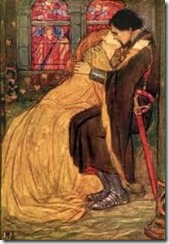
Romantic Love

Especially in this gender-sensitive, feminized age, the Lawrentian vision is looked at with some criticism.  There is no such thing as sexual mutuality, say feminist critics.  Male misogyny is deeply-rooted, hardwired, and inescapable.  The Idea of mutuality and equilibrium can only be a fiction in a patriarchal age.  Lawrence, they go on to say, is only feeding his own immature male sexual fantasies.

Lawrence’s conviction that such sexual epiphany can only come from a heterosexual union is also against the progressive polemic.  There is no such thing as sexual bi-polarity, only sexuality on a gradually defined gender spectrum. Matching any two of the hundred possibilities of sexual identity has nothing whatsoever to do with Lawrence’s insistence on heterosexual orgasm.   Lawrence is irrelevant to today’s woman, so the polemic goes. 

The woman reader thought differently.  While she may have dismissed some of Lawrence’s more far fetched notions of Tantric union and spiritual epiphany, there was no doubting that he had struck a very resonant chord when he wrote about female ecstasy and Connie’s profound appreciation of manhood.  The reason why Lawrence is relevant is because he never doubted the Tantric and spiritual nature of sexual intercourse.  The sculptures and bas-reliefs on the temples of Khajuraho, explicit in their sexuality, and placed on the holiest sites of worship, not only refer to sexual union as generally important, but spiritually so.  The gender spectrum denies the essentiality of heterosexual union; and while in principle there may be many possible combinations and permutations of sexual gender, identity, and partnership, in fact the numbers of people so classified are very few and far between indeed.

The theme of sexual harmony is not new.  Every man and woman hopes for a mutually satisfying sexual relationship and at least some intellectual, physical, and emotional satisfaction if not all three; and if one can believe popular romantic fiction, not an insignificant number of women hope for the best of all possible worlds, a spiritual union, Lawrence’s epiphany.  Serious fiction and drama are no different.  The brutal bloodletting of Albee’s Who’s Afraid of Virginia Woolf is all about finding sexual equilibrium, stripping pretense down to the marrow and starting over.  The Taming of the Shrew is perhaps Shakespeare’s only real love story.  Kate and Petruchio need each other, complement each other, and form a perfect equilibrium.  Kate’s long soliloquy about adoring and respecting her husband has often been misread as Shakespeare’s angry misogyny; but it is just the opposite.  Petruchio has liberated Kate from her patriarchal father and abusive sisters, and she has given him the  strong, determined, willful, sensual woman he has sought for years.  Ondaatje’s The English Patient is a subtle, complex, and very romantic love story, told within the context of history, war, class, fidelity, and simple passion.

Petruchio

We all want to have ‘what she’s having’, and why not? In a world of ever more, bewildering subdivisions and subcategories of sexuality, behavior, and personality, it is legitimizing to want a powerful, equal, mutually satisfying physical and emotional love.