'All happy families are the same; and all unhappy families are unhappy in their own way', observed Tolstoy in his opening to Anna Karenina, and true to his word, the Karenin, Levin, and Oblansky families are indeed unique in their particular struggles. In fact Tolstoy's true meaning is that family unhappiness is so common, so diverse, and so ubiquitous, that the premise of a happy family is an oxymoron.

Literature since the Greeks has chronicled dysfunctional, murderous, duplicitous, and treacherous families. The Oedipus cycle and the Oresteia have all to do with suspicion, deviousness, hubris, and insensitivity, all of which lead to exile, vengeance, and murder. Clytemnestra, enraged at her husband Agamemnon's sacrifice of their daughter, Iphigenia for the sake of favorable winds in a questionable war, plots with her lover to kill him; and after she does, she exiles her son and imprisons her daughter, sealing the fate of the family in the pursuit of the satisfaction of her own ambitions.
Shakespeare's plays are all about the jealousy, envy, ambition, and amorality of every family. There is not much good to say about the families of Macbeth, Hamlet, Othello, Cleopatra, Titus, Dionyza, and Lear. Heroes of magnanimity and rectitude like Pericles, his daughter Marina, and Isabella show up from time to time but the course of family history is sadly the same throughout.

The Shakespeare critic Jan Kott has said that if all of Shakespeare's Histories were laid end to chronological end, the very same dramas would play out again and again - only the uniqueness of the way the plotting and murders take place would be of interest. Shakespeare like the Greeks understood that aggressiveness, self-interest, ambition, territorial will, and unstoppable, self-serving pride are innate, absolute, and irrepressible.
It is with some surprise, therefore, that any observer can possibly say that we are living in the worst of times, that we are particularly given to venality, greed, untoward ambition, and territorial hegemony. Although history repeats itself and the record of predictable wars, civil strife, ethnic rivalries, and predatory ambition is unmistakably clear, liberal critics see only linear movement. Progressivism is based on the premise that the world is in the worst trouble it has ever been in, but that through dedication, principle, and hard work the dream of a compassionate, verdant, harmonious society is indeed possible.
For decades progressives have warned that the sky is falling, Armageddon is nigh, and the end of days is upon us; and as predictable as sunrise, the howling increases to a shriek whenever the winds shift and the nation becomes more embracing of originalist values, individualism, and private initiative. It is bad enough to ignore the predictable cyclical nature of history, another thing altogether to insist that it can be resisted, changed, and reversed.

The divisions in American society are not because of politics but political philosophy. Progressives believe that each generation is immutably unequal, oppressive, and unenlightened; but with vision and effort a new, better world can emerge. Conservatives, like Aeschylus and Shakespeare, understand that as long as human nature remains the same, there will be only repeats of ignorant ambition, ferocious jealousy, and inhuman conduct. The goal is mitigation, not elimination.
These same progressives devolve the case to families which too are riven by the same socio-cultural divisions as higher-order institutions; but which can be made more cooperative and community minded in order to participate in the Utopian journey.
So, language is monitored and restricted, 'bullying' is condemned, excellence is discouraged in the name of equity and self-esteem, cooperation is engineered and individuality marginalized. A false, idealistic, unreal world of aspiration replaces the real one - the one governed by human nature; the Darwinian one which is the only way the human race can change.

Politics is simply human nature writ large. The same ambition, aggression, self-interest, and territorial claims of siblings is played out on the national and international stage. There should be no surprises. As Shakespeare well knew and Jan Kott pointed out, politics is a product of human nature, history is therefore cyclical and repetitive, but that each iteration will be different.
Nothing Donald Trump has done defies historical imperative. He has been no more aggressive in his attempts to reset the political course of America than what Augustus did in Rome, Laozi in China, Louis XIV in France or Vittorio Emanuele II in Italy. In fact his attempts to reverse the debilitating measures of progressivism to counter the very determined, imperial ambitions of Russia and China - purposeful, aggressive, and uncompromising - are very much within a familiar historical perspective.
Perspective - that is what the Left has none of. The unannounced entries of DOGE (Department Of Government Efficiency) into federal buildings were not Soviet pogroms or the forced removal of Jews from the Warsaw ghetto, nor Kristallnacht, nor the trains to the camps; nor were they Maoist forced marches or Soviet exiles to Siberia. All were predictable expressions of the same innate, universal desire for power, authority, and dominance - horrific and exaggerated but human nonetheless.
To conflate one with the other, despite their nativist roots, is false and anti-historical; but to acknowledge the perpetual repetition of ambitious aggression, the consolidation of power, and the tendency to autocratic rule is realistic and historical.
'Democracy is the worst form of government in the world', said Winston Churchill, 'except for all the rest', and yet two of the three world superpowers today - Russia and China - are anything but democratic. In fact Communist China has raised hundreds of millions out of abject poverty, has built a strong, powerful economy, has retained a profound respect for traditional Confucian values, and leads the world in in finance, development, and social equity.

The political historian Francis Fukuyama once wrote about 'the end of history', with the fall of the Belin Wall, the victory of the West over Communism and the beginning of a new, harmonious, peaceful world order. Of course he was wrong. No sooner was the Soviet hegemony over its various republics ended than they began to vie for influence and power.
Once Communist Yugoslavia was disbanded, long-hidden ethnic rivalries surfaced and bloody civil wars ensued. The increase in democratic inclusivity and tolerance led the way for Islamic terrorism and intimations of a Muslim caliphate. The world is far more divided and troubled now than it was in the Cold War days.
The lessons of history assure us that this current disorder will end in reformulation, new axes of power, new rivalries, new forms of government and governance, new alignments, alliances, and enemies. Transition will be just as nasty as any before, and the new sectoral arrangement will be just as tensely confrontational.
Will the reign of democracy end? Will the world revert to what it was before this brief period since the French and American Revolutions? Imperial powers, China-like capitalist communalism, some other socio-cultural configuration?
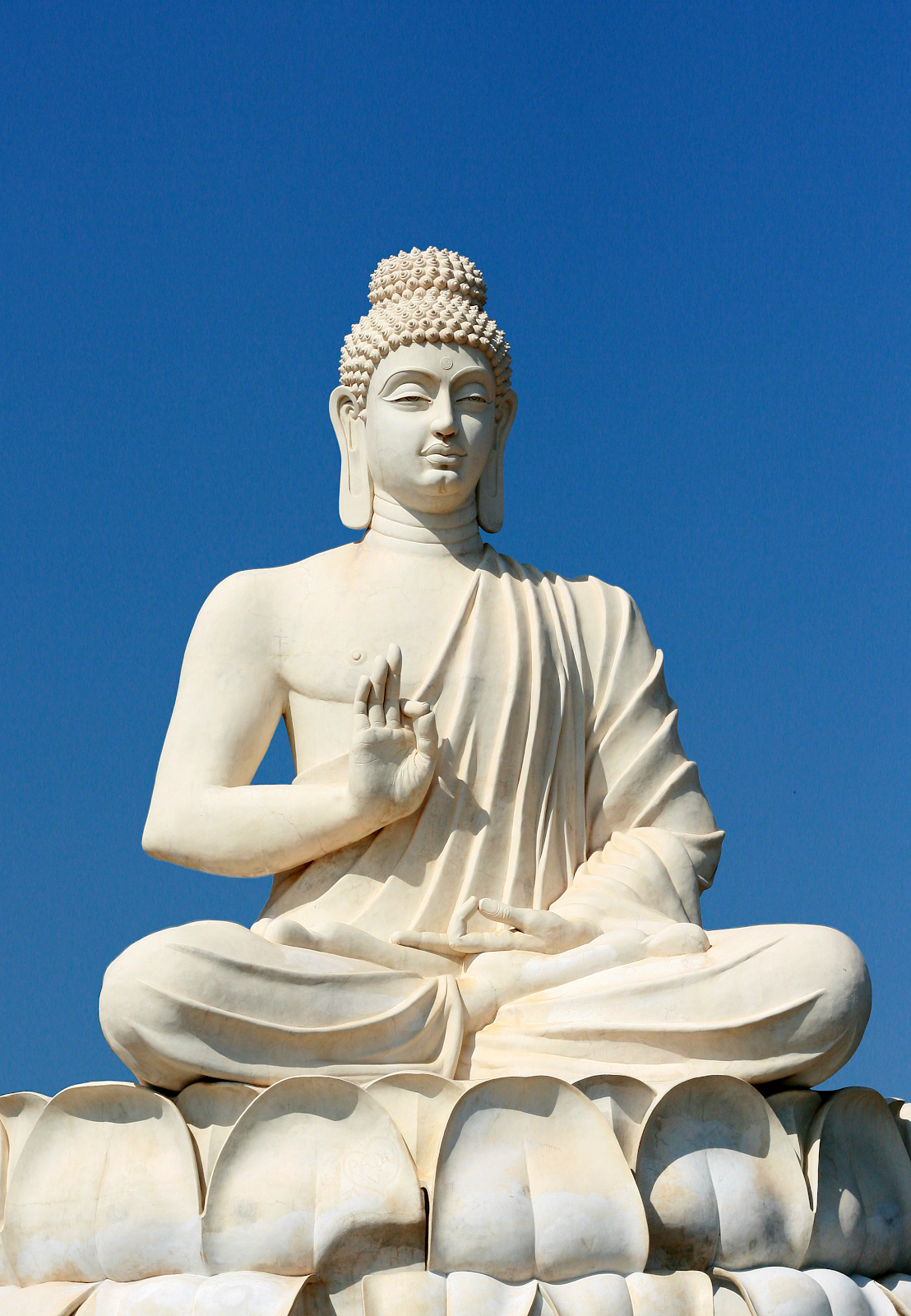
Certainly and absolutely. As Buddhists say, 'There is nothing certain in the world but change', and as long as human nature remains as is - that is, without the distinct possibility of transformative genetic engineering - history will continue to be a round of contentious, hostile, confrontational episodes.
Playwrights and authors will still have their unhappy families to write about - they too will remain unchanged, no matter how many reformist movements attempt to improve their lot. Siblings will continue to fight for parental recognition, husbands and wives will seek sexual solace elsewhere, wills will be debated and fought over, and temporary peace will be all that can be hoped for.
A desperately pessimistic vision? Hardly. Simply a dispassionate look at history.


 Posts
Posts


No comments:
Post a Comment
Note: Only a member of this blog may post a comment.